Freya Vogel · 23 September 2026
Mapping the Evolution of Indexing Signals Through Multi-Phase Site Restructuring Processes
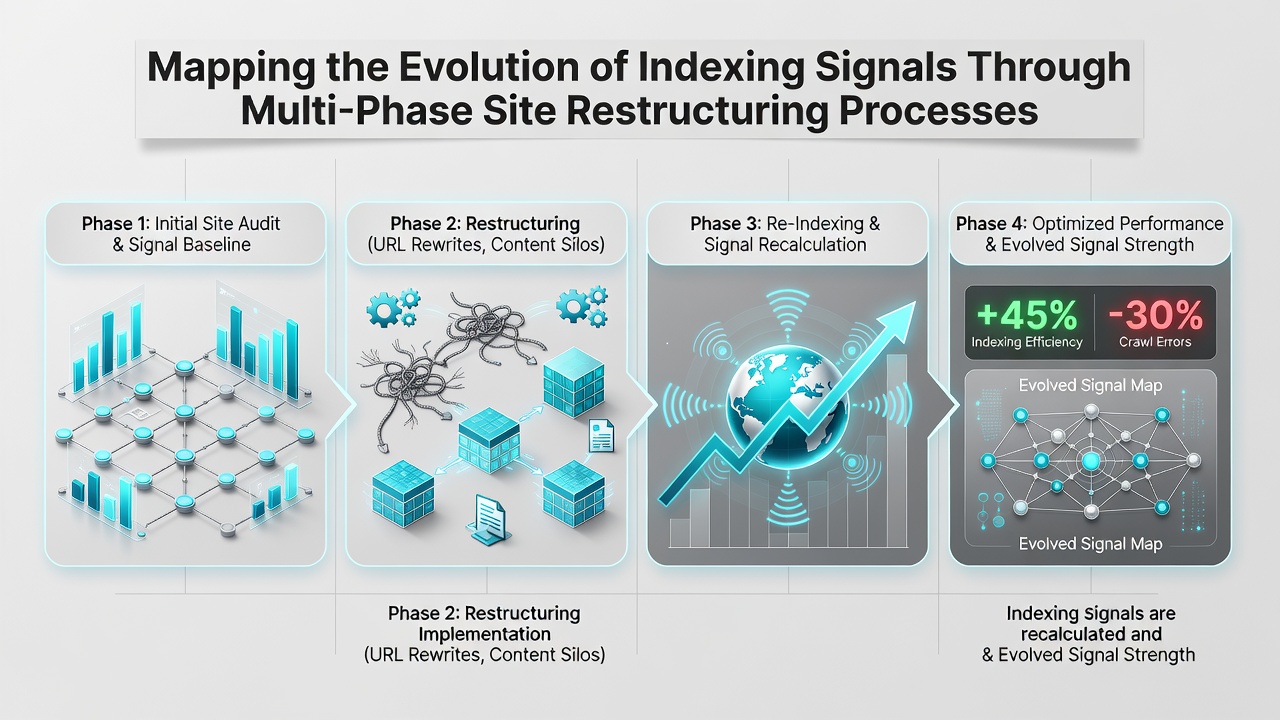
Multi-phase site restructuring involves breaking large-scale website changes into sequential stages that allow search engines to process updates without abrupt disruptions to existing index records. Observers note that indexing signals shift gradually as each phase introduces modifications to URL structures, content hierarchies, and internal linking patterns while the site remains partially live.
Data from web crawling studies shows that search engines track these signals through repeated visits that capture incremental alterations in page content, metadata consistency, and redirect chains. Researchers at institutions tracking long-term web dynamics have documented how signals such as crawl priority and freshness indicators evolve when restructuring occurs over several months rather than in a single deployment.
Initial Mapping of Baseline Signals
Teams begin by recording current index status across all key pages before any structural work starts. This baseline includes measurements of how frequently crawlers visit sections of the site and which canonical tags search engines currently respect. According to documentation from Google Search Central, maintaining stable signals during early phases depends on preserving consistent sitemap submissions and avoiding simultaneous changes to robots.txt directives.
One documented case involved a large e-commerce platform that logged indexing metrics for six weeks prior to the first phase. The resulting dataset revealed patterns in which category pages received higher crawl rates than product detail pages, a distribution that informed the sequence of subsequent restructuring steps.
Phase Transitions and Signal Adaptation
During the second phase, when primary navigation elements move to new locations, indexing signals begin to reflect updated internal link equity flow. Search engines respond by re-evaluating page importance based on the revised architecture, often adjusting crawl budgets allocated to newly prominent sections. Studies conducted by academic groups in Australia have tracked similar transitions and found that gradual rollout reduces the duration of temporary de-indexing events compared with full-site launches.
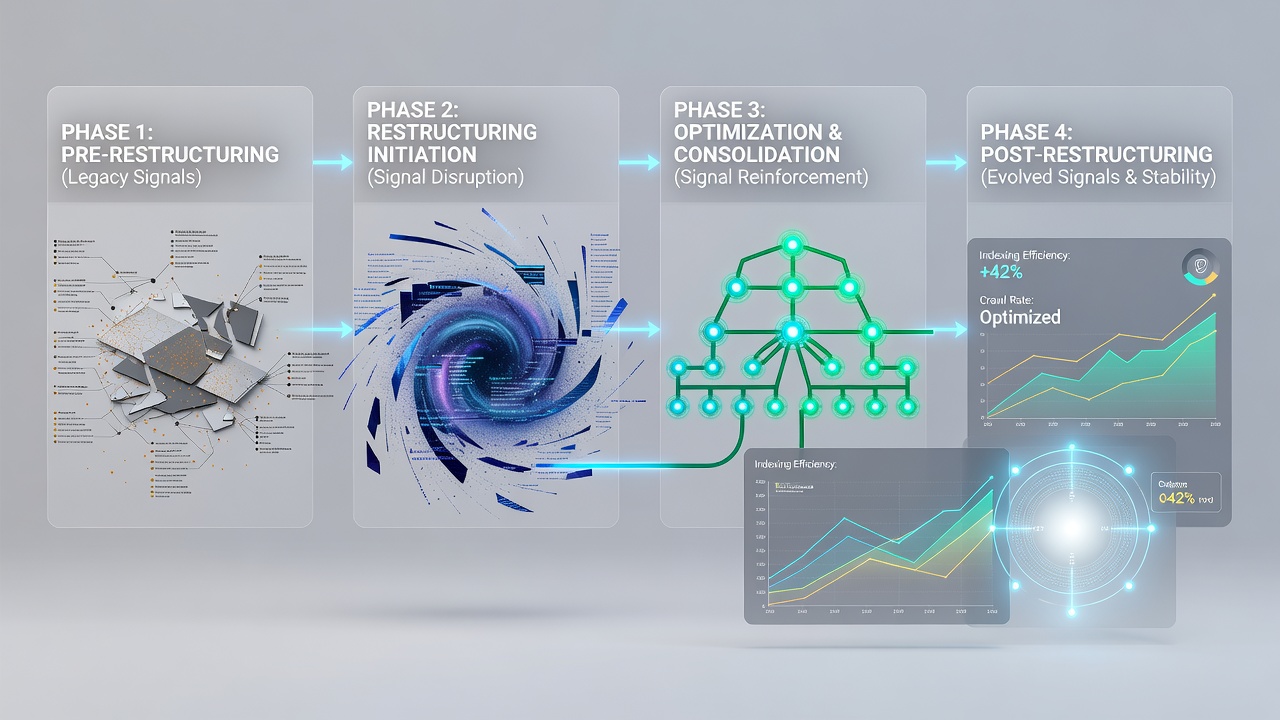
Redirect implementation plays a central role at this stage. Permanent redirects carry forward authority signals while temporary ones can dilute them if left active too long. Observers tracking European digital infrastructure projects report that staggered redirect testing across phases allows teams to monitor how quickly index coverage rebounds after each batch of changes.
Monitoring Signal Evolution in Later Phases
By the third and fourth phases, when content consolidation and schema updates occur, indexing signals stabilize around the new site topology. Metrics such as indexation rate and average crawl interval typically return to pre-restructure levels once duplicate content issues are resolved through canonicalization and content pruning. Figures from North American web analytics providers indicate that sites completing multi-phase migrations by mid-2025 showed faster signal normalization than those attempting single-phase equivalents.
September 2026 marks a notable period when several documented restructurings aligned with broader updates to crawling algorithms, providing additional data points on how phased approaches interact with evolving detection methods. Analysts reviewing these timelines note that sites maintaining consistent XML sitemap updates across all phases experienced fewer fluctuations in indexed page counts.
Long-Term Signal Stabilization
After final phases conclude, residual signal drift can persist for several weeks as search engines reconcile historical data with the current structure. External link profiles remain influential during this window because inbound references continue to point to old URLs until they are updated by referring sites. Government digital guidelines from Canada emphasize the value of post-migration audits that verify signal consistency across both desktop and mobile index versions.
Those who have examined multi-year datasets observe that successful restructurings correlate with sustained improvements in crawl efficiency once the new architecture becomes the dominant signal source. This outcome emerges when each phase incorporates feedback loops based on real-time indexing reports rather than relying solely on pre-planned schedules.
Conclusion
Mapping indexing signal evolution through multi-phase restructuring requires systematic data collection at every stage combined with precise control over redirects, sitemaps, and content hierarchies. The approach yields measurable patterns in how search engines adapt to structural change, patterns that become clearer when examined across extended timelines and multiple geographic data sources. Continued observation of these processes supports more predictable outcomes for large-scale site projects.